
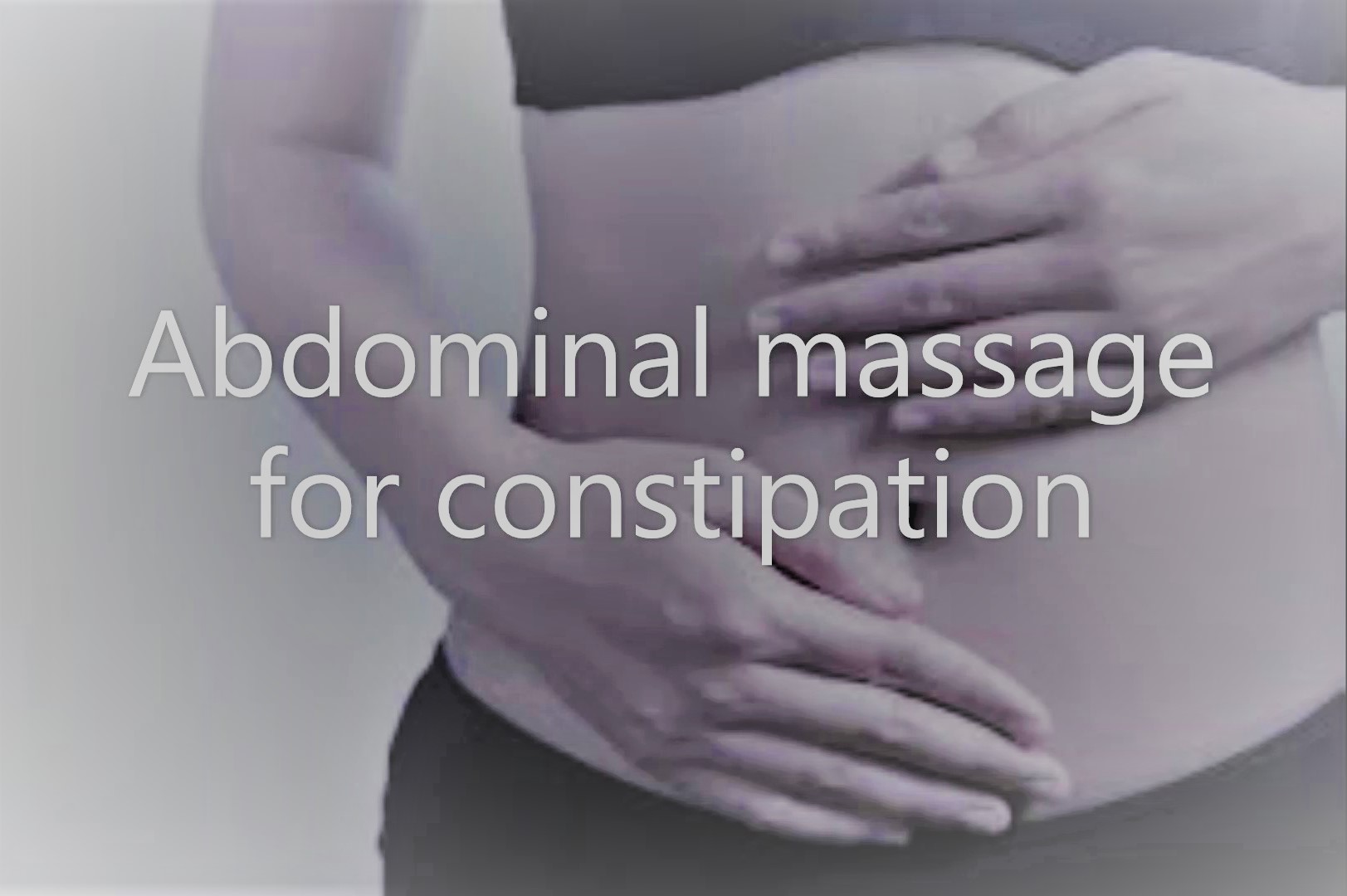
This self-treatment circular massage technique can be performed at home. It can reduce and eliminate gas, easing constipation. The massage follows the naturally contracting waves of the colon, starting from inside the right pelvis, moving up towards the ribs, across the belly, and down to the inside of the left pelvis. This technique helps stimulate peristalsis, the colon’s normal wave pattern of movement. It is most beneficial when performed after eating, but can be done anytime of day.
Positioning: You can practice this technique while laying down, or in the shower with soap. Some people find that it is just as effective to do the massage through clothing while sitting or standing.
How to Massage: Start by placing your fingertips or knuckles on your right side, just inside your hip bone.
- Make small circular movements while you move upward toward your rib cage.
- Once you reach the bottom right side of your rib cage, take your circular movements across to the left side of the bottom of your rib cage.
- Next, move downward until you reach the inside of your left hip bone. This is the path that your feces travel in your colon.
- Continue to perform your abdominal massage in this pattern for 10 minutes each day.
You can apply as much pressure as is comfortable during your massage. Start gently and build pressure as you continue to practice. Notice any areas of pain as you massage. Pay particular attention to areas of slight pain that may be relieved as you massage, but if you have areas of significant or intense pain, consult with your healthcare provider.
Other Considerations:
Abdominal massage should always be used in combination with a bowel-conscious diet that is high in the proper type of fiber for you, fluids (primarily water), and a regular exercise program.
Use essential oils like peppermint, ginger, lavender and chamomile with your massage as these are helpful aids in gut health.
We offer a free 15 minute consultation with one of our pelvic floor physical therapists to answer questions and learn how pelvic floor physical therapy can be helpful for you. We use an integrative whole person approach and will help you with all the lifestyle factors that can make a difference in your wellness journey.
Link to video of abdominal massage for gut motility: https://www.youtube.com/watch?v=ca441CdHaIg&t=23s