Breathe your way to a healthy pelvic floor: Diaphragmatic Breathing 101
It is a continuous conversation in my treatment room with my clients – every single patient, every day hears something about their diaphragm and the pelvic floor. So, this seemed like an easy blog topic! Let’s dive into the what how and why of this vital connection and give you some tips on how to utilize the diaphragm to hack into the pelvic floor.
The thoracic or repiratory diaphragm and pelvic floor muscles (PFM) are anatomically and functionally linked as opposing ends of the abdominal canister. They move in a coordinated, synergistic pattern during breathing. Focusing on getting the diaphragm to have optimal movement is an indirect way to improve pelvic floor relaxation, elongation, improve lymphatic system function, & calm the nervous system. All of these help with pelvic floor muscle health!
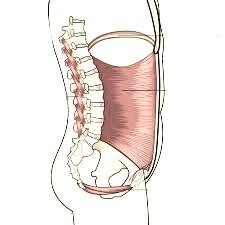
Physiological Basis of the Diaphragm–Pelvic Floor Relationship
During quiet diaphragmatic breathing, the two muscle have a rhythmic, reciprocal pattern:[2]
– Inhale: The thoracic diaphragm contracts and descends, while the pelvic floor and abdominal muscles relax and lengthen eccentrically, allowing the pelvic floor to descend slightly.
– Exhale: The thoracic diaphragm relaxes and ascends, while the pelvic floor and abdominal muscles contract, producing a lift, or upward movaement of the pelvic floor.
Both the deep and superficial layers of the pelvic floor are activated during breathing. There is greater activation during exhale. The deep pelvic floor layer has a stronger correlation with breathing than the superficial layer.[3]
Clinical Implications
– Pelvic floor relaxation and overactivity: In stressful situations or vigorous physical effort, breathing shifts toward a thoracic pattern with continuous contraction of abdominal and pelvic floor muscles. With stress, emotional or physical we tend to guard with our pelvic floor rand abdominal wall, and this can become habit. Practicing quiet diaphragmatic breathing helps to facilitate pelvic floor relaxation during inhale, which may help address chronically overactive, non-relaxing muscles. This is a common finding in my clinical practice and is supported in the research as well.[2]
– Diaphragm training and PFM endurance: A randomized trial in 148 men post-radical prostatectomy found that while direct PFM training produced the greatest PFM strength gains, diaphragm training had the best effect on PFM endurance and showed the strongest correlation between continence outcomes and PFM variables.[4] The bottom line: we can utilize dipahragmatic breathing to boost endurance training in the pelvic floor – this study looked at men after prostatectomy, but from experience this works for many patients with varying diagnoses.
– Position matters: The synergy between the diaphragm and PFM during voluntary PFM contraction is greatest in the crawling (quadruped) position, suggesting this may be an optimal position for combined diaphragmatic breathing and PFM exercises.[5] I find clinically, that practicing in a lot of different positions helps enhance the brain to muscle connection and we find that patietns can then connect to their pelvic lfoor and diaphragm for many different activities.
– Combined approaches: The research shows that it is important to include not just breathwork but also active training of the pelvic floor as best approach. An 8-week RCT in women with stress urinary incontinence found that PFM exercises combined with 360° expanded diaphragm exercises reduced the initiation time of PFM contraction during Valsalva, potentially enhancing the precontraction reflex.[6] Bottom line: it improved the reflexive reactivity of the pelvic floor for pressure managment tasks like lifting.
Summary
Diaphragmatic breathing coordinates with PFM activity through shared pressure dynamics within the abdominal canister. It can play a complementary role — particularly for PFM relaxation in overactive pelvic floors and for endurance training. Of course, diaphragmatic breathing is not the only approach to pelvic floor muscle rehabilitation. It must be used incombination with direct pelvic floor muscle training in treating conditions like stress urinary incontinence or pelvic organ prolapse.[1] It is a very powerful tool for pain, muscle relaxation, lymphatic function and overall health. If you are struggle with pelvic floor dysfunction you should begin working on breathwork, it is one tool you can utilize that is free and readily available to you! Just click HERE to learn how!
References
- Can you breathe yourself to a better pelvic floor? A systematic review. Bø K, Driusso P, Jorge CH. Neurourology and Urodynamics. 2023;42(6):1261-1279. doi:10.1002/nau.25218.
- Comment on the IUGA/ICS joint report on the terminology for the conservative and nonpharmacological management of female pelvic floor dysfunction. Talasz H, Kofler M, Lechleitner M. Neurourology and Urodynamics. 2017;36(8):2188-2189. doi:10.1002/nau.23267.
- Task-Specific Differences in Respiration-Related Activation of Deep and Superficial Pelvic Floor Muscles. Aljuraifani R, Stafford RE, Hall LM, van den Hoorn W, Hodges PW. Journal of Applied Physiology (Bethesda, Md. : 1985). 2019;126(5):1343-1351. doi:10.1152/japplphysiol.00704.2018.
- Effect of Diaphragm and Abdominal Muscle Training on Pelvic Floor Strength and Endurance: Results of a Prospective Randomized Trial. Zachovajeviene B, Siupsinskas L, Zachovajevas P, Venclovas Z, Milonas D. Scientific Reports. 2019;9(1):19192. doi:10.1038/s41598-019-55724-4.
- Exercise Position to Improve Synergy Between the Diaphragm and Pelvic Floor Muscles in Women With Pelvic Floor Dysfunction: A Cross Sectional Study. Korkmaz Dayican D, Keser I, Celiker Tosun O, et al. Journal of Manipulative and Physiological Therapeutics. 2023;46(4):201-211. doi:10.1016/j.jmpt.2024.02.005.
- Investigating the Effectiveness of Pelvic Floor Muscle Training, Including Sensor-Based Diaphragm Exercises in Women With Stress Urinary Incontinence: A Randomized Controlled Study. Yakıt Yeşilyurt S, Şahiner Pıçak G, Başol Göksülük M, Balıkoğlu M, Özengin N. Archives of Physical Medicine and Rehabilitation. 2026;107(3):373-382. doi:10.1016/j.apmr.2025.06.019.
Disclaimer: This blog is here for your help. It is the opinion of a Licensed Physical Therapist. If you experience the symptoms addressed you should seek the help of a medical professional who can diagnose and develop a treatment plan that is individualized for you.

Related Posts

The Real Reason Golfers Lose Power, Distance, and Comfort on the Course
Golf may look smooth and effortless, but the body works extremely hard during every swing. A powerful golf swing depends…
Seeing the Pelvic Floor in Real Time: How Rehabilitative Ultrasound Is Changing Physical Therapy
Pelvic floor physical therapy is changing in exciting ways. One of the biggest advances is the use of Rehabilitative Ultrasound…
Constipation and GLP-1 Medications: What You Need to Know Before Symptoms Start
Constipation is a common but often overlooked side effect in people taking GLP-1 receptor agonists, a class of medications widely…